Mind Reading for Leaders: How to Win a Room Before You Say a Word
Five skills from our conversation on the Events: Demystified Podcast that any leader can start practicing on Monday.
Let’s get the confession out of the way. We are not psychic.
We are Rogers & Rizzo, the world’s only known all-female mentalist duo. Through Curated Entertainment, we have entertained teams at Apple, Google, and OpenAI. And every time we have read a mind, the method was the same: we were paying closer attention than anyone else in the room.
That’s the secret. Mind reading is real. Most of us are just out of practice.
When Anca Platon Trifan invited us onto the CEO Edition of the Events: Demystified Podcast, she asked how we lead rooms full of strangers, skeptics, and people with one eye on their inbox. Here is the answer, in five skills you don’t need a top hat to use.
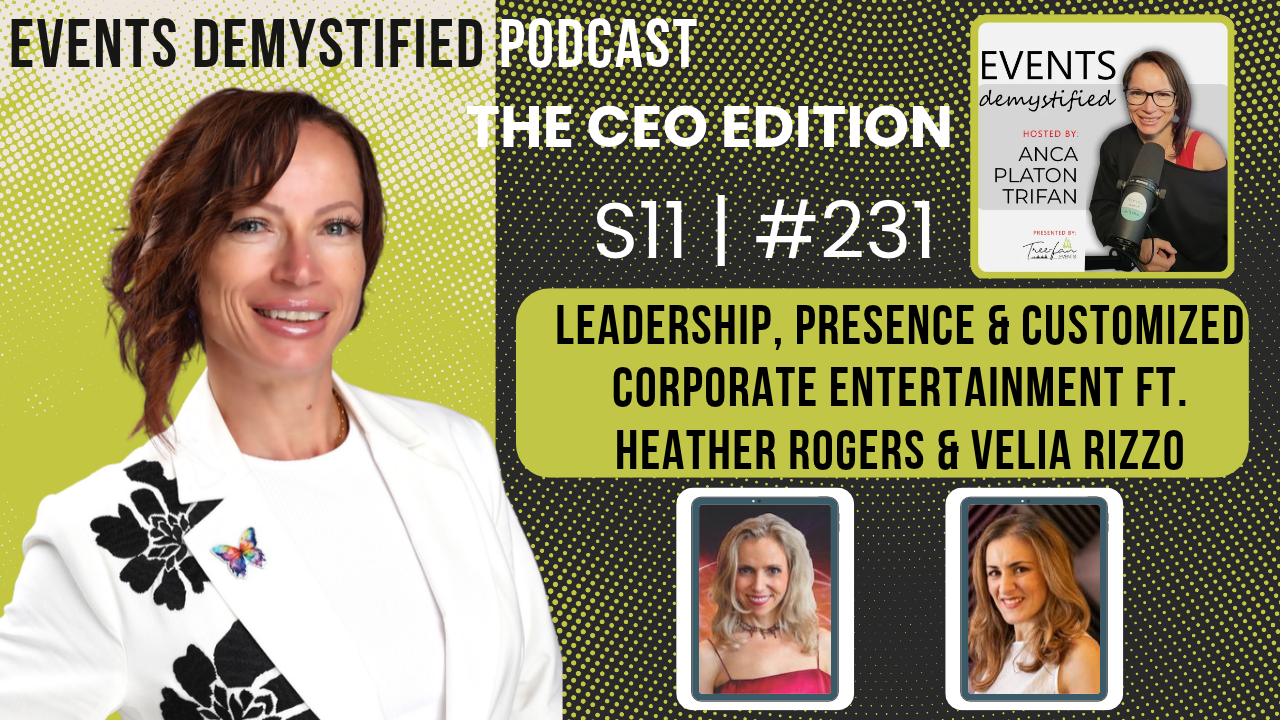
Watch Episode 231 of Events: Demystified, The CEO Edition.
1. Read the baseline, not the body language
Pop psychology loves a cheat sheet. Crossed arms mean defensive. Touching your nose means lying.
Here is the problem. Crossed arms might mean defensive. Or cold. Or comfortable. In one large review of lie detection research, people spotted lies only about 54 percent of the time. That’s barely better than flipping a coin.
So mentalists don’t decode single gestures. We learn what normal looks like for this person, in this room, today. Then we watch for change. The quiet one who suddenly leans in. The chatty table that goes still. Change is the signal.
Anca put it beautifully in her episode notes: a room tells you what it needs long before anyone says it out loud.
Try this: In the first three minutes of your next meeting, notice each person’s starting energy. Then watch for the first shift. That shift is where the real conversation is.
2. Know what they expect before you try to surprise them
Every great trick starts with a prediction about the audience, not about the cards. Before we can amaze anyone, we need to know what they assume is about to happen.
So before any event, we ask our clients two questions:
“What do your attendees walk in expecting? And what would you like them to walk out experiencing?”
As Velia said on the show, that question moves the conversation from “a DJ, a musician, or a magician?” to “what should our guests feel?” It works just as well for a quarterly all-hands, a tough announcement, or a team offsite.
Try this: Before your next big meeting, write two lines. What will they walk in expecting? What do you want them to walk out experiencing? Then design the gap between the two.
3. Earn attention instead of demanding it
Nobody ever paid closer attention because someone told them to. Attention is a gift, and people give it to whoever makes them feel noticed.
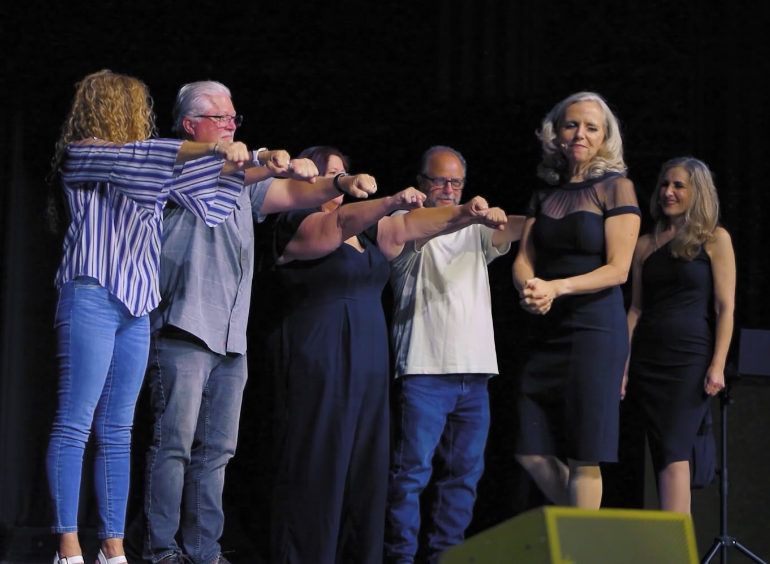
Our favorite moment in any show is not a prediction. It’s the second a volunteer becomes the star, and the whole room leans in because that person could have been them.
“You cannot agenda your way into connection.”
Leaders can do the same thing without a single playing card. Credit a specific idea by name. Ask the quiet person a real question. Notice out loud what someone did well.
Try this: In your next meeting, name one person’s contribution specifically. Not “great job, team.” Try “Maria’s fix on the registration page saved us a week.” Watch what happens to the room.


4. Read your own mind first
Here is a secret from the stage. An audience can sense a performer’s doubt from the back row. Uncertainty leaks.
The same is true in leadership. Before you can read a room, you need to know your own mind: who you are, why you are there, and what I call the beating heart of your business.
“When you’re standing so firm into what you know of who you are and why you’re there, that really helps navigate those difficult situations.”
On the podcast, we shared a simple tool. When a request lands on your desk, you have three doors. Accept it. Decline it. Or renegotiate it. Most people forget the third door is there.
Velia came up in business believing the client is always right. Deciding that rule could not run our company took courage. Every graceful no has protected a better yes.
Try this: The next time someone asks for something, pause before answering and pick a door on purpose.
5. Let them discover it
The strongest moment in mentalism is never the one we explain. It’s the one the audience figures out for themselves, a half second before the reveal. People believe what they discover.
Leaders can design for that, too. On the show, we talked about swapping one keynote for ten minutes of guests talking with each other, followed by a guided debrief. It costs less and gets far more people involved. We’ve even seen mandatory cybersecurity training turned into something people actually enjoyed.
Try this: Instead of presenting your conclusion, ask the question that leads people to it. Then let the room arrive.
The real trick [Heading 2]
None of this needs a crystal ball. It needs practice. Notice the baseline. Know what they expect. Make someone the star. Know your own mind. Let them discover the answer.
In a world where AI can draft the memo, the rarest leadership skill is reading the human in front of you.
“Nobody can read minds. But anyone can learn to read a room, and a room is just minds sitting close together.”
Our thanks to Anca Platon Trifan for a thoughtful, generous conversation, and for featuring us in the CEO Edition of Events: Demystified.
Watch and listen
Watch on YouTube · Listen on Spotify · Read the show notes
Want to see these skills live?
Rogers & Rizzo bring mind reading to corporate events, leadership retreats, and galas, customized to your people and your goals. Your guests will spend the evening wondering how we knew. Your leaders will leave knowing how they can, too.
Let’s make some magic.